
While watching an episode of Antiques Roadshow, a piece of pottery was brought to the table. The owner explained that it had been passed down to him from his mother. He said she normally bought very refined pieces—nothing like this one. The surface was crackled, and the glaze was thick and running down the sides. He was surprised she had purchased it at all and assumed someone had probably given it to her. Regardless of how it came into her possession, he said she loved the piece dearly.
The expert then described the potter and his process. The piece was made by Glen Lukens, a Southern California artist who was prolific in the 1930s and 1940s. Lukens would go out into the desert to collect alkaline materials—natural minerals with unpredictable reactions in the kiln. He intentionally pushed clay beyond refinement. His work was known for thick, aggressive glaze application, crackling and running surfaces, distorted forms, and finishes that showed stress, gravity, heat, and timing. These were not accidents. They were allowed outcomes.
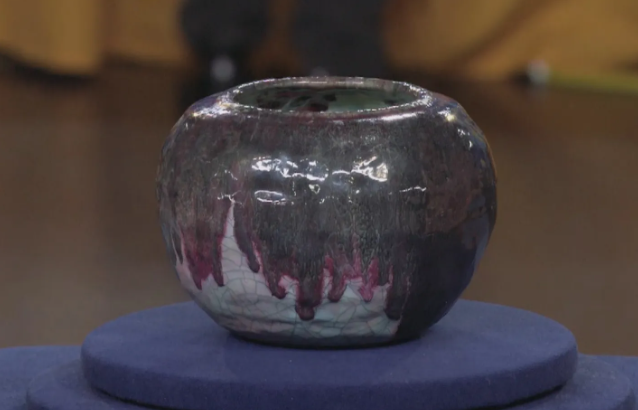
Lukens’ process alone said a great deal about him. He wasn’t trying to control the outcome completely. He worked with materials, timing, and uncertainty. The glaze wasn’t precisely applied. The pot was the result of what was allowed to happen. He treated pottery as a lived process.
He challenged the standard of smooth, decorated pottery by introducing rough, coarse surfaces. Lukens respected the craft, but he refused to remain inside its rules. He understood the accepted norms of his time. He didn’t reject them out of disregard. He expanded them, changing what was considered acceptable.
Traditional pottery tried to hide the struggle. Lukens did the opposite. Cuts stayed visible. Joins weren’t disguised. The glaze didn’t behave politely. The piece showed how it came to be.
The son seemed to realize that his mother must have learned or experienced something through this pot—something that caused her to embrace it.
Tastes change when meaning enters the room.
That’s when it hit me. Perfection wants admiration. Imperfection invites engagement. I like defects. I like getting close to something, taking time to understand it. The story matters as much as the outcome.
Perfection is meant to be seen from a distance. You don’t get close to something perfect. In fact, sometimes you’re not supposed to. It asks to be observed, not engaged.
Defects are different. They cause you to notice—to lean in and ask questions. Not what went wrong, but what you’re actually seeing. What was allowed to happen.
I don’t think defects are really defects at all. They’re evidence. Marks left by time, pressure, and response. In people or in pottery, they show where control loosened and something else was allowed to take part. They record the path something took to become what it is.
Some things needed to happen the way they did. The unevenness. The wear. The deviation from the plan. Growth leaves marks. Survival does too.
We move through our lives the same way. Not once, but over and over again—passing through heat, pressure, and waiting. Each time, we come out changed in small ways that are hard to hide.
A perfect object doesn’t tell you much about how it lived. A worn one does. A chipped edge means it was handled. A crack means it lasted long enough to survive. These aren’t signs of failure. They’re proof that something was kept—because of the story it carries, not in spite of it.
I like defects because they feel familiar. They make room for recognition—of effort, of adaptation, of having been shaped by something real. They don’t ask to be admired. They ask to be understood.
Perfect things get admired.
Imperfect things get lived with.
And when meaning enters the room, that difference matters.